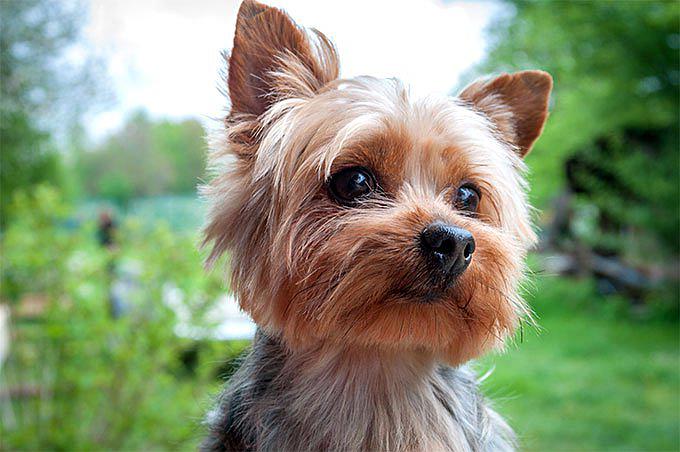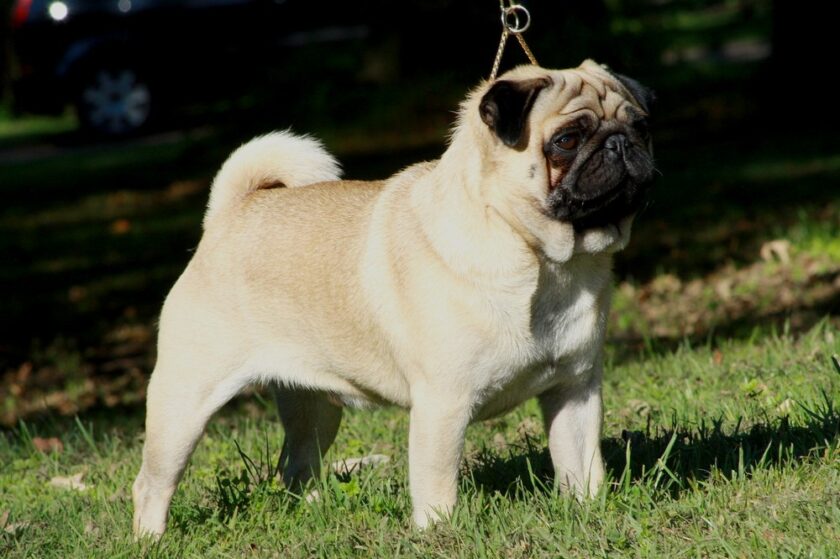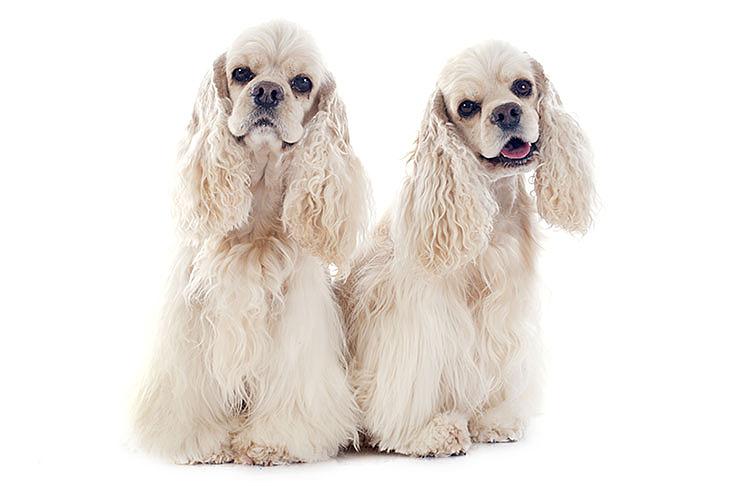
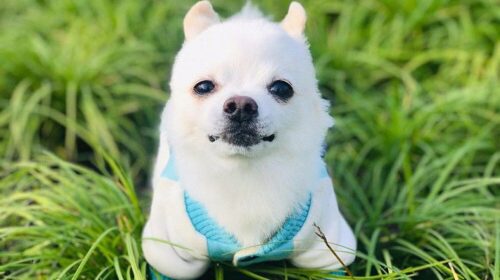
The Pomeranian is a very attractive and popular small toy-sized dog. Its extremely friendly and playful nature makes it a favorite among pets. Originating in Germany, the Pomeranian belongs to the Spitz family. The first Pomeranians were relatively large and mostly white-haired. Since the 19th century, through selective breeding, they have gradually evolved into the small breed we know today. The modern Pomeranian is considered a small toy-sized breed.
History of the Pomeranian Dog
The Pomeranian breed originated in the 19th century and belongs to the Spitz family. Its ancestors were Arctic sled dogs, so it is closely related to the Keeshond and Norwegian Elkhound. According to the earliest records, the breed originated in Pomerania, a region bordering Poland and Germany. At that time, these dogs were used to herd sheep. In 1750, the Pomeranian spread to various European countries, including Italy. When Queen Victoria visited Italy, the people of Florence presented her with a Pomeranian, which she greatly admired. Early Pomeranians were large and mostly white; since the 19th century, selective breeding has resulted in the small, fluffy, brightly colored dog we know today.
The German Spitz is a descendant of the Stone Age “peat dog” “Canis familiaris palustris ruthmier” and, later, the lake-dwelling Spitz; the German Spitz is the largest breed in Central Europe. Numerous sub-breeds have since emerged from this breed. In non-German-speaking countries, the Wolfhound is called the Keeshond, and the Toy Spitz is called the Pomeranian.
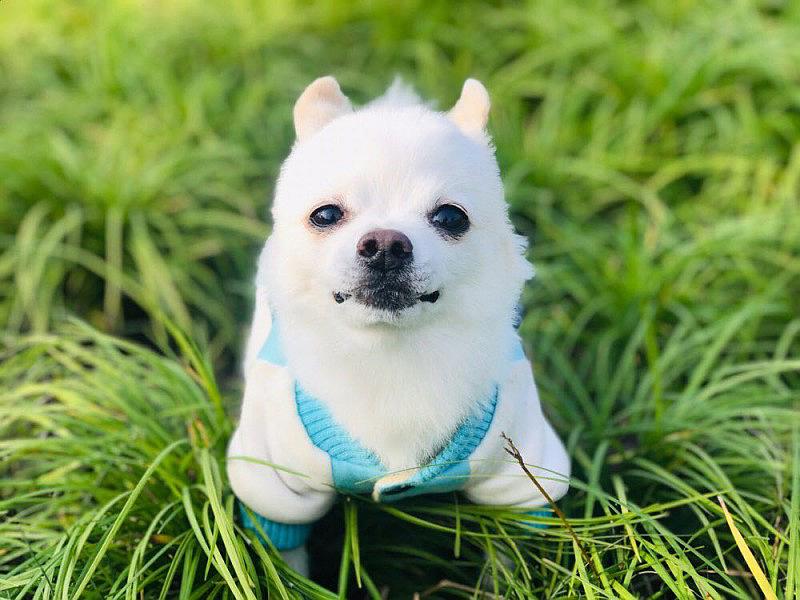
Pomeranian
Physical appearance of the Pomeranian dog
The Pomeranian is a small, short, agile, and attractive dog, a variety of the German Spitz. Its scientific name is Hadoria Pomeranian (commonly known as the English Pomeranian).
overall texture
Its head is proportionate to its body, and most of its fur is white, giving it a regal appearance. From a distance, it resembles a soft ball, making it adorable. Pomeranians weigh between 3-7 pounds, and the ideal weight for a show-quality Pomeranian is 4-6 pounds. Dogs under or over this weight range are considered undesirable. However, overall quality is more important than size. The body length (measured from shoulder to hip) should be slightly less than 4 feet.
Hair
Double coat, consisting of a coarse, straight outer coat and a softer inner coat. Long hair on the head, neck, ears, chest, and tail should be trimmed or plucked. For exhibition, the hair should be of sufficient length to assess its texture. The neck, ears, and head should be well covered with slightly coarse hair, but not silky. Faults: Too soft, too greasy, or oily appearance.
Colour
Recognized standard colors are black and white, black and silver, and solid black with white markings without stripes, which may also include various mixed colors. All variations of the black and white coat are acceptable, ranging from light to mixed shades of black, coral, and tan, with or without stripes. In black and white coats, the color may gradually fade from black to white.
Head
The skull is well-formed, with a slightly rounded cranial cavity that should not be arched. The head is proportionate to the body, with a short, straight, and well-shaped muzzle that opens smoothly without appearing rough. The bite is scissor-like. Missing one tooth is acceptable. The ears are set high and stand erect when viewed from the front or side. The ears are small, close together, and preferably stand erect, resembling fox ears.
eyes
Medium-sized, long, slightly slanted, almond-shaped. Black. Eyelashes are various shades of black (dark brown in the Brown Fox Terrier).
Ear
The ears are located on the top of the head and are relatively close together. They are triangular in shape, pointed, and erect, with strong tips.
nose
The nose is round, small, and black (except in gray fox dogs, which have a brown nose).
tail
The hair is set high and of medium length. It curves upwards, curving forward over the back, and has a straight base. It adheres tightly to the back and is densely covered with hair. Double curls at the ends are also acceptable.
Chest
The chest extends at least to the elbows. The ribs are properly arched, the chest is deep, and the chest extends backward, forming a short waist.
neck
Strong, well-built, connected at the shoulders, and the skin taut at the neck.
pioneer
Straight, fairly broad in front. The scapula is long and naturally sloping backward. The upper arm is approximately equal in length to the scapula, forming a 90-degree angle with it. The shoulder is well-formed and firmly attached to the chest. The elbow joint is strong, close to the chest, neither turned outward nor inward. The forearm is of medium length, strong, and straight. The hind legs are densely haired. The foot bones (metacarpal bones) are strong and of medium length, forming a 20-degree angle with the vertical when standing. The forelegs are as short as possible.
back and hind legs
The hindquarters are extremely muscular, with abundant hair down to the ankles. When standing, the hind legs are straight and parallel to each other. The upper and lower thighs are approximately equal in length. The knees are strong and set at a moderate angle, neither turned outward nor inward. The ankles should be of medium length, very strong, and perpendicular to the ground. The feet should be short, well-formed, and naturally arched, hence the name cat’s feet. The paws are strong, and the nails should be as dark as possible.
How much does a Pomeranian dog cost in India?
The price of a Pomeranian typically ranges from ₹5,000 to ₹20,000, with the rest of the price depending on the dog’s appearance and quality. Most people keep Pomeranians as family companions, so expectations regarding appearance and breed are not very high.
Dogs with good appearance, quality, and a calm temperament are acceptable, selling for around ₹5,000 at pet markets. Pet Pomeranians purchased from kennels can cost up to ₹20,000. It’s not advisable to buy very cheap dogs, as they can cause many problems once brought home.
Pomeranian dog intelligence
Pomeranian breed dogs are ranked 23rd in terms of intelligence.
A Pomeranian’s emotions are never hidden from their owners. They wag their tail when they’re happy and bark when they’re unhappy. They’ll jump into your lap if they want to play. If they’re not interested, they’ll simply walk away. They never lie and aren’t shy about expressing their opinions.
Expressions of excitement and happiness: The most common way Pomeranian dogs express excitement and happiness is by wagging their tails and jumping high. They also often express this with a “smile.” Pomeranians, which often show their teeth when smiling, share similar facial expressions with Samoyed dogs, which are known for their cheerful natures.
Anger: You don’t even need to see a Pomeranian’s facial expression to recognize a rage; just hear their angry, shrill bark and you’ll know someone is in trouble. Pomeranians are not gentle with people or animals they perceive as a threat, so owners must train them properly and stop them in time. Otherwise, it could easily turn into a bloody incident!
Expression of sadness: The eyes become lifeless, the head is bowed, and the animal leans close to its owner, looking at them with pleading eyes; sometimes it hides in a corner or under a stool and becomes completely still.
Signs of fear: The most obvious signs are a drooping tail or tucking it between the legs. Ears are pulled back, hair stands on end, eyes widen, the body trembles, the dog stands still or fidgets restlessly, and may even retreat. However, our Pomeranian puppies are not usually fearful; they always consider themselves strong and behave accordingly.
Expressions of anticipation and eagerness: If a Pomeranian raises its hind legs, lowers its front legs, wags its tail vigorously, and its eyes sparkle, it is saying to you, “Come play with me!” If you appear serious at this time, it will behave in a particularly friendly manner to attract your attention and arouse your feelings, so please try to accept its invitation, even if it is only for a short time.
Behavior and habits of the Pomeranian
Pomeranians tire quickly, and when they’re full of energy, they can play with you for hours. But if you want to take them hiking, be prepared like luggage. When they get tired, they’ll want to be cuddled. They’ll automatically roll over to find the most comfortable position, and then lie back down so you can hold them tightly and fully enjoy the warmth and intimacy their owner provides.
Pomeranian dogs have a strong sense of curiosity and spend their entire lives constantly seeking out activities and things that interest them, such as chasing thieves or catching rats—these are mischievous pursuits they never tire of. However, Pomeranians make excellent guard dogs; their small size prevents them from being aggressive. Besides being agile and active, Pomeranians are also naturally mischievous and playful. Don’t let their small size fool them; they can be extremely destructive, so their owners must strictly discipline them.
Pomeranian dogs are as adorable as they are prone to throwing tantrums. They’re also quite playful, and despite their small size, their bark is very shrill and loud, even louder than that of many larger breeds. If you scold them for no reason, they’ll immediately bark back and throw a tantrum.
Once they get what they want, they become very possessive and guard their food and toys very closely. Typically, they watch those possessions intently and refuse to move away, feeling secure only when their owner goes to bed. Even then, they’re not completely at peace; if their owner gets up in the middle of the night, they keep an eye on them, checking to see if they’re interested in their personal belongings.
Grooming and Care of a Pomeranian
Due to the Pomeranian’s thick and long coat, regular grooming is essential. Their coat should be trimmed periodically and brushed carefully daily, as the thick coat can be prone to tangles and hair loss. Hair is trimmed in a circular pattern throughout the body to maintain a neat and attractive appearance.
A Pomeranian should usually be bathed once every 10–15 days. When bathing, special attention should be paid to cleaning the ears, teeth, and body. A major source of dog odor is their mouth and ears, so regular dental cleaning and earwax removal are essential.
Additionally, anal glands are a significant source of odor in dogs. If they are not cleaned properly, they can become inflamed, odor-causing, and cause infection. Therefore, cleaning these glands during bathing is considered essential. With proper grooming and regular care, Pomeranians remain healthy, beautiful, and attractive.
Pomeranian dog temperament and personality
Their thick coat requires not only frequent trimming but also daily careful brushing. Because of their thick coat, they shed heavily during breeding season, requiring frequent cleaning and grooming.
Typically, hair all over the body is cut in a circular shape with scissors. To maintain a good shape and neatness during trimming, the hair should be combed before trimming, and the tips of the ears should be cut in a rounded shape.
Bad breath is a major cause of bad breath in dogs, so checking for plaque buildup is crucial. Therefore, owners should have their dogs’ teeth cleaned regularly to effectively control plaque and keep their mouths fresh.
Dogs’ ears often have a foul odor. However, proper earwax cleaning can reduce this. Regular cleaning is essential; otherwise, even healthy ears can develop an unpleasant odor.
The most important source of odor in dogs is their anal glands. Therefore, when bathing your dog, it’s best to clean their anal glands to maintain their health.
Pomeranian lifestyle
The Pomeranian is a very playful, small toy-like pet dog, and has a very loyal and gentle temperament. Several other breeds are similarly playful, such as the Pug, Chinese Lion Dog, Yorkshire Terrier, Miniature Pinscher, and Maltese.
Pomeranians were originally herding dogs, and are intelligent, ranking 5th in intelligence among small dog breeds, making them easy to train.
The Pomeranian’s gait is proud, dignified, and lively. Their temperament and behavior are always positive and energetic.
Pomeranians are friendly, intelligent, and lively dogs, making them excellent companion dogs as well as competitive show dogs.
Pomeranians have thick fur, resembling small balls of fur, and they bark slightly. Their scientific name is Spitz, referring to their fox-like appearance. Pomeranians have large ears and weigh less than 2.72 kilograms. Male Pomeranians typically come into estrus between 10 and 12 months of age. If the male dog is developing normally and has a thick coat, breeding is acceptable.
For breeding, choose a female dog that has previously given birth and has a calm temperament. Before one year of age, try breeding only 1-2 times a month. After one year, you can increase this to 1-2 times. After one and a half years, normal mating is possible, but frequent mating should be avoided, otherwise the quality and quantity of the male dog’s coat will be significantly affected, accelerating his aging process. A female dog’s first estrus cycle is influenced by the local climate, environment, and diet and usually occurs between 8 and 11 months. Subsequent estrus cycles occur every 4-6 months. Typically, estrus cycles occur more frequently in spring and autumn. If the dog is over 10 months old and weighs more than 1.5 kg at the time of its first estrus cycle, it can be used for breeding. A very young dog is not suitable for breeding. Breeding too early will affect its development, resulting in lower pregnancy rates, smaller size, and a higher rate of difficulty in delivery (dystocia).
Additionally, Pomeranians are small dogs, so artificial assistance is best during mating. They reach sexual maturity at 6-8 months and physical maturity at 12 months. Once physically mature, they can mate and produce offspring. They come into heat twice a year, in spring and autumn, with a gestation period of 58-65 days and a litter of 2-4 puppies born at a time. Barking: Most Pomeranians are quite vocal. Despite their small size, their bark is loud and shrill, even louder than that of many larger breeds. This trait makes them excellent watchdogs; they bark loudly at the slightest disturbance to alert their owners. However, they are primarily guard dogs and, due to their small size, do not have any aggressive tendencies.
The Pomeranian has a double coat with a soft, dense undercoat. The outer coat is long, straight, shiny, and coarse. The dense undercoat supports the outer coat, allowing the hair on the Pomeranian’s body to stand upright. The hair on the neck, front shoulders, and chest is denser, creating an attractive pattern. The hair on the head and legs is shorter and closer to the body than on the rest of the body. The hair on the forelegs extends to the ankles, and the tail is covered with long, thick, wire-like, and straight hair. The hair can be trimmed to maintain a neat and attractive shape. Pomeranians are suitable for indoor living, but due to their active nature, daily exercise or walks outside are highly recommended.
Advantages and Disadvantages of Having a Pomeranian Dog
Advantages: Pomeranians are small, toy-like dogs with a clever and alert temperament. They are intelligent, sociable, and very playful. They are extremely friendly and non-aggressive, which can be considered their advantages.
Pomeranians are also very hardworking and dedicated; despite their small size, they are very enthusiastic and responsible when it comes to work. This is why Pomeranians are so popular.
Disadvantages: In addition to these advantages, Pomeranians also have some disadvantages. For example, they can be clingy, bark excessively, and easily excitable. Their cheerful nature makes them easily adaptable to family members, but they are also less wary of strangers. If you want to keep a Pomeranian to guard your home, strict training is essential. The Pomeranian’s various advantages have made them increasingly popular. Of course, their minor shortcomings do not affect people’s admiration and affection for them. These minor shortcomings are acceptable. In fact, sometimes these very shortcomings are what make us feel a special kind of love and tolerance for Pomeranian dogs.
Differences between British and American Pomeranian dogs:
- The Hadori Pomeranian originated in England and is named after the Hadori kennel founded by Lady Decker, known as the “Queen of the Pomeranian” by Pomeranian lovers worldwide. Therefore, it is often also called the British Pomeranian. High-quality Hadori Pomeranian dogs are considered among the best Pomeranian dogs. Even if their offspring are of slightly lower quality, as long as the lineage is purebred, they are still considered high-quality or superior Pomeranian dogs. The American Pomeranian originated in the United States. In the American Kennel Standard classification, this breed is commonly known as the Miniature Spitz or Pomeranian, which is defined as a “guard dog” or “family dog.” Therefore, the most fundamental difference between the two is their lineage (same ancestor and breed, but different ancestry). Popular breeds online include British Pomeranians like Shunsuke and Boo. With proper care, they look very cute and are highly appreciated as pets.
- The Hadori Pomeranian may appear small in stature, but its bone density is very high, making it feel heavy to hold. The American Pomeranian, on the other hand, has a much larger bone structure and density, as well as a slightly more arched and larger skull.
- The Hadori Pomeranian has a slightly wavy outer coat that is hard, coarse, shiny, and has black tips; the American Pomeranian’s coat is typically fluffy, soft, coarse, dense, and plentiful.
- Hadori Pomeranians don’t typically make a drumming sound when walking or galloping. At a standstill, they have a graceful body with a slightly bowed head; American Pomeranians appear graceful when stationary, and walk with their heads held high and chests puffed out, giving them a lively appearance.
- Purebred Hadori Pomeranians are extremely rare globally, and good breeds are hard to come by. Owners generally don’t donate female dogs, and their fertility is low, typically producing only 1-2 puppies at a time (3-4 puppies are extremely rare), and survival rates are also low. Therefore, their market value is high and doesn’t fluctuate much. In contrast, American Pomeranians are more likely to produce litters of 4 or 5 puppies at a time, and have performed well in domestic competitions in recent years.
How to identify a real Pomeranian dog
Pomeranian dogs have thick, soft coats. A well-groomed yellow Pomeranian dog resembles a raccoon. They are adorable and playful, making them a favorite among many. Pomeranians are one of the most self-confident dog breeds. They can’t tolerate any shortcomings. So, let’s learn how to care for a Pomeranian in everyday life.
Pomeranian Care Tips
Generally, Pomeranian dogs have relatively little body odor compared to other breeds, which is why many people prefer to keep them. However, some Pomeranian dogs develop an unpleasant odor even after being kept. This odor actually comes not from the dog’s body, but from its breath and ears, which owners can prevent and reduce.
Bad breath is a major cause of bad breath in dogs, so checking for plaque buildup is crucial. Therefore, owners should have their dogs’ teeth cleaned regularly to effectively control plaque and keep their mouths fresh.
Dogs’ ears often have a foul odor. However, proper earwax cleaning can reduce this. Earwax protects the ears from external germs. Earwax can be white, pale yellow, or yellow, and its texture can range from powdery and clumpy to soft and slimy – all of which are considered normal. Regular cleaning is essential; otherwise, even healthy ears can develop an unpleasant odor.
The most important source of scent in dogs is their anal glands. These glands also help dogs recognize each other, as each dog’s anal glands have a different scent. Therefore, when dogs meet, in addition to kissing, they sniff each other’s rears. Furthermore, wild dogs secrete anal gland fluid onto grass and plants to mark their territory. However, indoor dogs, due to lack of exercise and weakened leg muscles, are unable to expel excess anal gland fluid, causing the glands to accumulate, become blocked, and swell. This can result in unpleasant odors, swelling, bleeding, and even rupture. Therefore, when bathing your dog, it’s best to clean their anal glands to maintain their health.
An ideal Pomeranian should be graceful and energetic, with a full body and thick fur. It should have a gentle disposition, an energetic gait, and a cheerful face. Its head is typically long and flat. The ears should be set on the small of the head, and the face should ideally be small. The eyes are sunken and oval, giving it a small and attractive appearance. The chest should not be too broad, and the line from the throat and chest to the forelegs should be straight. The tail should be carried slightly upward, not too low, and long, thick fur should remain on the middle of the back.
Generally, the hair all over the body is cut in a rounded shape with scissors. To maintain good shape and neatness during trimming, the hair should be combed before trimming, and the tips of the ears should be cut in a rounded shape. The hair at the base of the tail is cut wide with electric clippers so that the tail appears curved from the back to the ears. The nails are cut short, and the long hair on the toes is cut short to resemble a cat’s claws.
In short, there are many ways to care for dogs. Each person can choose a method based on their circumstances and the dog’s physical characteristics, aiming to enhance their strengths, hide flaws, and highlight their strengths. Choose the appropriate grooming method to enhance your dog’s beauty and make them even more beautiful, healthy, and adorable!
Tip : To avoid body odor, bathe your Pomeranian once a week in the summer and every 10 to 15 days in the winter. Get your Pomeranian vaccinated annually and dewormed regularly (both internally and externally).
Frequently Asked Questions (FAQs)
How much does a Pomeranian dog cost?
The price of a Pomeranian typically ranges from ₹5,000 to ₹20,000. The rest of the price also depends on the dog’s appearance and quality.
Where does the Pomeranian dog rank in intelligence?
Pomeranian breed dogs are ranked 23rd in terms of intelligence.
Do Pomeranian dogs bark a lot?
Most Pomeranians are quite vocal. Despite their small size, their bark is loud and shrill, even louder than that of many larger breeds.
What is the gestation period of a Pomeranian dog?
Female Pomeranians typically come into heat twice a year and have a gestation period of approximately 58–65 days, producing 2–4 puppies at a time.
What is the hair of Pomeranian dogs like?
The Pomeranian has a double coat consisting of a soft, dense undercoat and a long, straight, shiny, and coarse outer coat.
Can Pomeranian dogs be kept indoors?
Pomeranians are suitable for indoor living, but due to their active nature, daily exercise or walks outside are recommended.
Why does a Pomeranian dog have body odor?
Sometimes a dog’s mouth, ears, or anal glands can cause a foul odor, so regular cleaning and care is essential.