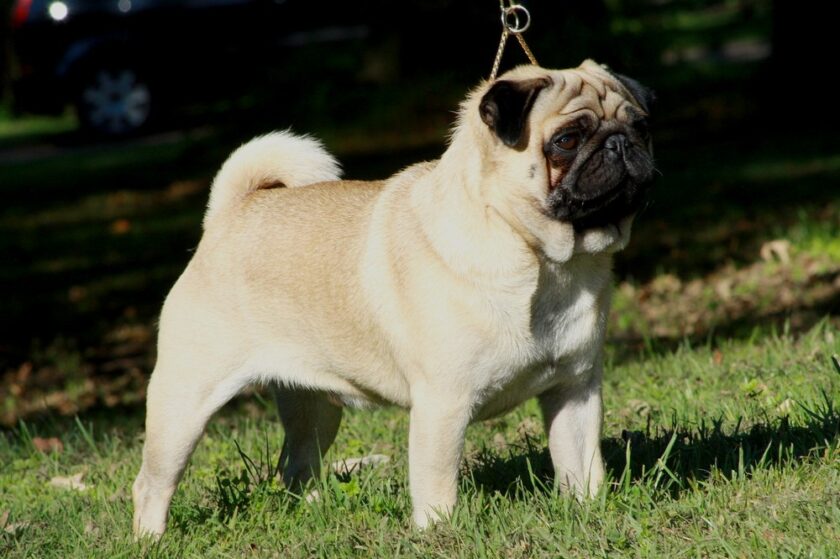

Cocker Spaniel is an agile and cheerful hunting dog, with a balanced and well-proportioned body. Its temperament is playful; its gait is powerful and effortless; it can easily complete reconnaissance tasks, scare away birds with its sharp bark, and retrieve prey. It is highly enthusiastic about hunting, and its constantly wagging tail reflects its joy during the hunt—a characteristic perfectly aligned with the breed’s purpose. Its head is particularly distinctive. Above all, its body is well-proportioned; no limb should be overextended, whether standing or walking; overall harmony is more important than the sum of the limbs. The American Cocker Spaniel is the smallest of the spaniel breeds, with a strong and compact body and a well-proportioned and attractive head. The body is solid and well-built, with ideal shape and structure. The front legs stand straight, supporting the shoulders, while the back slopes gently from the shoulders to the muscular hind legs. They possess both speed and stamina. Cocker Spaniels have an independent and lively temperament, with a steady disposition, and show no signs of timidity.

Cocker Spaniel breeds
Cocker Spaniels, also known as hunting dogs, are divided into two breeds: the English Cocker Spaniel and the American Cocker Spaniel. Descended from the lineage of Spanish hunting dogs, they are sociable and friendly, alert and agile, and have a very sweet and charming appearance. They are easily trained and loyal to their owners. The Cocker Spaniel breed is divided into the American Cocker Spaniel and the English Cocker Spaniel. The American Cocker Spaniel is a relatively ancient hunting dog breed, bred today primarily as a pet and companion dog. The English Cocker Spaniel originated even earlier than its American counterpart. After the Cocker Spaniel was brought to the United States, the modern Cocker Spaniel was developed through scientific selective breeding. While the two breeds share some similarities, they also differ in many ways, each with its own unique charm.
Cocker Spaniel’s hair
The head hair is short and soft; the body hair is medium-length, straight or slightly curly, and silky. Trimming may be done to remove excess hair and enhance the dog’s natural appearance. Trimming should be as natural as possible.
Colour
Miscellaneous. Multicolored types may have distinct spots or spotted patterns, with white mixed with various shades of black, dark brown, or red. In multicolored types, solid spots should ideally be evenly distributed; the absence of spots is acceptable. Solid colored types have various shades of black, dark brown, or red. White paws are undesirable in solid-colored dogs; a small amount of white on the throat is acceptable, but this white should not classify the dog as piebald.
Head
Viewed from the side and front, it appears rounded and slightly flattened. In profile, the eyebrows do not rise much above the occipital region. Viewed from above, the planes of the sides of the skull are nearly parallel to the planes of the sides of the muzzle. The stop is pronounced but moderate, with a slight notch.
eyes
Their eyes form the basis of their ideal expression. Medium-sized, full, and slightly oval; well separated from each other; eyelids tightly set. The third eyelid is indistinct; it may or may not have pigment deposits. Except for liver and liver-and-tan dogs, which may have hazel eyes, all other colors should have dark brown eyes.
Ear
Located downward, hanging close to the head; the outer covering is thin, extending to the tip of the nose, and covered with long, silky, straight or slightly curly hair.
nose
Broad, with a well-developed sense of smell.
tail
The tail is docked. Located near the hocks. Ideally, the tail is held erect and wags vigorously when walking. When excited, the tail may be raised slightly, but it should never be held erect.
Chest
The chest is deep; not so broad that it restricts movement of the forelimbs, nor so narrow that it appears compressed or pinched. The fore-chest is well developed, with the sternum projecting slightly beyond the joint of the shoulder blades and upper arm. The chest is deep, extending to the elbows, sloping upward and backward with a moderate protrusion. The ribs are well developed, rising toward the center of the body, tapering slightly toward the back. They are of adequate depth and extend well backward. The back is short and strong, with a strong and balanced loin.
Neck
Neck well-proportioned and muscular, arched towards the head and merging smoothly into the shoulders, without loose skin hanging down; of medium length and in proportion to the dog’s height and length.
front part
The English Cocker Spaniel’s body type is slightly angular. The scapula is sloping, flat, and level. The scapula and upper arm are approximately equal in length, and the upper arm is positioned significantly backward. The joint between the scapula and upper arm is so angular that when the dog stands naturally, its elbow is directly below the top of the scapula.
Forearms: Straight, with bones from elbow to ankle almost the same size throughout; elbow held close to the body; ankle nearly straight.
buttock
The leg angle is moderate, and the forelegs are well balanced. The hips are fairly broad and rounded. The upper thigh is broad, strong, and well-shaped, providing powerful movement. The lower thigh is well-shaped and approximately equal in length to the upper thigh. The knee joint is strong and moderately bent. The distance from the ankle to the toes is short. The feet are similar to the forelegs.
Evolution and Origin of the Cocker Spaniel
The British Cocker Spaniel originated in the United Kingdom. The breed has existed for centuries, and paintings dating back to 1300 AD depict dogs resembling the Cocker Spaniel. Over time, the breed gradually split into several distinct varieties:
- English Cocker Spaniel
- Welsh Cocker Spaniel
- Sussex Spaniel
- Field Spaniel
- Irish Water Spaniel
- Clumber Spaniel.
The documented history of the modern Cocker Spaniel began on June 14, 1879, with the birth of the first British Cocker Spaniel, Ober. This dog made its debut at a dog show four years later. By the early 19th century, it gained worldwide recognition as a companion dog, becoming especially beloved in Europe and America. The breed club was established in Britain in 1902. The American Cocker Spaniel originated in the United States, descended from Spanish Bird Dogs. Brought to Britain from Spain around the early 19th century, the breed developed into a British variety, after which it was taken to the United States for extensive breeding and refinement. There, it evolved into a smaller, more elegant dog, named the American Cocker Spaniel. In 1946, it was officially recognized as a new breed, sparking widespread enthusiasm. Even today, it remains one of the most popular breeds in the United States. The Cocker Spaniel originally evolved from the Spanish Spaniel. Its name is derived from the old word “cock,” meaning to flush out prey, and also reflects the breed’s historical role in hunting woodcock. The first officially registered dog in the United States appeared in 1879. The American Spaniel Club (ASC) was founded in 1881. At that time, no standard had been established for the American Cocker Spaniel, and American Cocker Spaniels varied widely in type and style. In September 1946, the AKC recognized the American Cocker Spaniel as a distinct breed, although the American Cocker Spaniel was not formally listed in the AKC’s pedigree register until January 1947.
How much does a cocker spaniel cost?
According to market research conducted by the editors of Pets Army, the typical price of a Cocker Spaniel suitable for a pet is approximately ₹17,000 to ₹60,000 per dog. Prices vary depending on appearance and quality. Nowadays, most people raise Cocker Spaniels primarily as family companions. Such pet Cocker Spaniels don’t have high requirements for appearance or breed. Dogs with acceptable appearance and quality, and a calm temperament, selling for around ₹17,000 in the pet market, are suitable for purchase. Even in kennels, dogs in this pet category should be priced between ₹17,000 and ₹60,000. It’s not advisable to purchase dogs at too low a price, as many problems are often found in them after they are brought home.
Cocker Spaniel Intelligence Rating
They rank 18th in the global dog intelligence rankings, making them an above-average intelligent breed. The Cocker Spaniel is an excellent choice for those looking for a clever and family-friendly pet dog.
Cocker Spaniels are relatively easy to train and have a strong emotional nature. These dogs are cheerful, energetic, loyal, and enthusiastic about their owners. They enjoy spending time with humans and are cautious of strangers when kept indoors. For those who prefer small to medium-sized dogs, the American Cocker Spaniel is an excellent choice.
Characteristics of the Cocker Spaniel
The English Cocker Spaniel is a cheerful and affectionate dog with a calm temperament—neither lethargic nor overly excitable. Kind, sweet, and gentle by nature, it is highly obedient, extremely affectionate, and full of energy. Agile, alert, and intelligent, it is also optimistic and lively. A hard worker and reliable companion, it is highly enthusiastic for working in the fields. The American Cocker Spaniel is gentle, affectionate, and alert; cheerful and lively; energetic, kind, and friendly; alert and agile; charming and endearing; easily trainable; and loyal to its owner. Historically used for hunting mountain birds, it is now a beloved companion and show dog for children and women. Many in Europe and America also raise it as a companion and protection dog. This breed can also serve as a guard dog.
Cocker Spaniel Lifestyle Habits
Excitement and Happiness: The most common way Cocker Spaniels express excitement and happiness is by wagging their tails vigorously and jumping high in the air. Often, they also express themselves through a “smile.” This includes wrinkling their nose, curling their upper lip to show their teeth, slightly closing their eyes (sometimes narrowing them into thin slits – much like a human smile), maintaining a gentle gaze, keeping their mouth slightly open, ears pinned back, making soft sounds through their noses, and gently rotating their bodies.
Anger: When angry, their facial expressions are very similar to a “smile.” The nose is raised, and the upper lip is pulled back, revealing the teeth. The difference lies in the eyes – which are wide open with a sharp gaze – and the ears, which stand straight back at an angle. Typically, the mouth is tightly closed while a threatening growl is emitted. The dog stamps its legs, stiffens its body, and holds its tail either erect or extended, maintaining a distance from people.
Sadness: The eyes appear lifeless, the head is lowered, and the dog approaches its owner with pleading eyes. Sometimes it hides in a corner or under a chair and becomes completely quiet.
Fear: The tail hangs down or is tucked between the legs—this is the most obvious sign. The ears are pulled back, the hair stands on end, the eyes widen, the body trembles, and the dog may freeze or fidget restlessly, even retreat.
Expectation and anticipation: If the Cocker Spaniel wags its tail, stands still, and makes direct eye contact, it indicates that it is waiting to be taken out to play or waiting for mealtime. Affection: A high, constantly wagging tail, head bobbing, an arched body, and sometimes extending its front paws toward the person indicate affection and a desire to play.
Advantages and disadvantages of the Cocker Spaniel
Genetic disorders: cataracts, glaucoma, epilepsy, hip deformities.
Common health problems: Ear diseases, outer ear infections, inner ear infections, hip deformities, hypothyroidism, allergic dermatitis, urinary tract infections.
Choosing and Identifying Cocker Spaniels
Cocker Spaniels are intelligent and alert, with large, round eyes and long, leaf-shaped ears. Their skulls are rounded without being overly prominent, with prominent eyebrows. Their muzzles are broad and deep, with a large nose and well-developed nostrils. Their teeth bite like scissors, and their bodies are strong, compact, and muscular, with overall good proportions. Gentle, playful, and cheerful, they are also affectionate and sociable, and are loved by women and children. Devoted and loyal to their owners and family, they make lovely companions for all members of the household.
Cocker Spaniels are naturally hunting dogs, so they are extremely energetic and love to exercise. If not properly trained from puppyhood, their behavior can spiral out of control as they grow. Therefore, if you have a busy work schedule, you’ll need to consider whether you have enough time to care for them. Cocker Spaniels also have dense fur, especially long, thick hair on their chest, belly, and legs, which requires daily brushing and frequent bathing. Therefore, they need an owner who can devote time and enjoys caring for them. Caring for a Cocker Spaniel requires a lot of attention and patience, including regular ear cleaning. Are you ready for these responsibilities?
Daily grooming and care
The Cocker Spaniel’s thick coat requires regular brushing and bathing. Otherwise, dust and dirt can accumulate, causing it to tangle and form clumps. This not only diminishes its beauty but also makes it susceptible to bacterial infections. Its large, floppy ears often cause problems, so periodically clean out earwax with cotton or gauze. Additionally, regularly remove plaque from its teeth and rinse its eyes with salt water to prevent infections caused by dirt. Take time to inspect your dog’s skin—lift the fur for a thorough examination. Healthy skin acts as your dog’s natural protective shield.
Cocker spaniels are very playful and energetic, so make sure they get plenty of daily exercise. Take them out for walks 2-3 times a day—ideally once in the morning and once in the evening or afternoon. Keeping them confined indoors for long periods of time, without enough time and space to move around, can cause them to become restless and even sick.
Feed them at regular times and in measured portions. Don’t overfeed them and avoid foods high in fat or protein to prevent obesity, which can harm their health and shorten their lifespan. Pay special attention to hygiene: throw away leftover food completely, change their water daily, and wash and disinfect their eating utensils.
Cocker spaniels are very easily trained. Incorporate training into their daily diet and exercise routine, and correct bad habits immediately to prevent stubborn or stubborn behavior.
Common health problems
Potential health problems in Cocker Spaniels include diaphragmatic rupture, allergic dermatitis, proctitis, chronic nephritis, cataracts, otitis externa, liver disease, dermatitis, urinary stones, mammary gland inflammation, and hypothyroidism. Recent studies show that rates of hepatitis, cataracts, and age-related cataracts are increasing in Cocker Spaniels. Dermatitis and otitis externa remain the most common diseases in the breed, while liver failure and intestinal atony can also affect them.
Ears are the most sensitive organs in Cocker Spaniel dogs, and the most common problem is otitis externa. If there is only black discharge and dirt coming out of the ears, cleaning with a special ear wash or applying ear drops may solve the problem. However, if symptoms such as fever, ulcers, foul odor, and persistent head shaking appear, it may indicate serious otitis externa, otitis interna, or otitis media. To reduce the risk of ear problems, owners should not only clean their dog’s ears regularly but also keep common ear care products at home, such as ear cleaning solution, anti-inflammatory medications, and ear treatment.
In everyday life, always pay attention to any unusual signs your Cocker Spaniel shows during activities like eating, sleeping, or walking. If any safety concerns arise, contact your veterinarian immediately. Homemade food often does not meet the Cocker Spaniel’s nutritional needs. To avoid potential liver or heart problems, choose a high-quality dog food and feed it daily along with homemade meals and a variety of nutritional supplements.
Cocker Spaniel Frequently Asked Questions (FAQs)
What type of dog is a cocker spaniel?
The Cocker Spaniel is a lively and cheerful hunting dog with a well-balanced and compact build. Its temperament is playful and its gait is powerful and effortless.
How many breeds of cocker spaniels are there?
Cocker spaniels, also known as hunting dogs, are divided into two breeds: the English cocker spaniel and the American cocker spaniel.
How much does a cocker spaniel cost?
According to market research data conducted by the editors of Pets Army, the typical price of a suitable pet dog is around ₹17,000 to ₹60,000 per dog.
Are cocker spaniels easy to train?
Cocker spaniels are relatively easy to train and have a strong emotional background. These dogs are cheerful, energetic, loyal, and enthusiastic towards their owners.
What is the temperament of a cocker spaniel?
Cocker Spaniels have an independent and lively temperament, they have a steady disposition and show no signs of timidity.
How to care for a Cocker Spaniel?
The Cocker Spaniel’s thick coat requires regular brushing and bathing. Its large, floppy ears often cause problems, so periodically clean out earwax with a cotton ball or gauze.
Is a Cocker Spaniel a good family pet dog?
Nowadays, most people raise Cocker Spaniels primarily as family companions. These dogs are cheerful, energetic, loyal, and enthusiastic towards their owners.
How much exercise does a cocker spaniel need daily?
Cocker spaniels are very playful and energetic, so make sure they get plenty of daily exercise. Take them out for walks 2-3 times a day.
What are some common health problems that Cocker Spaniels can have?
Potential health problems in Cocker Spaniel breed dogs include cataracts, otitis externa, liver disease, dermatitis, urinary stones and hypothyroidism.