There are two types of Welsh Corgis: the Cardigan Welsh Corgi and the Pembroke Welsh Corgi. Comparing the two, the Pembroke Corgi is smaller in stature, has straighter and lighter legs, while the Welsh Corgi has a finer coat. However, the Pembroke Corgi is more restless and excitable than the Cardigan Welsh Corgi, lacking a calmer temperament. Corgi dogs were greatly favored by the British royal family, particularly Queen Elizabeth II.
Corgis are small in stature but surprisingly strong, giving them the appearance of a robust body, full of energy, excellent bone structure, and remarkable stamina. They are among the most popular small guard dogs, being friendly and courageous by nature, neither timid nor violent. Although they are gentle, they should never be put into situations that they would resist.
layer
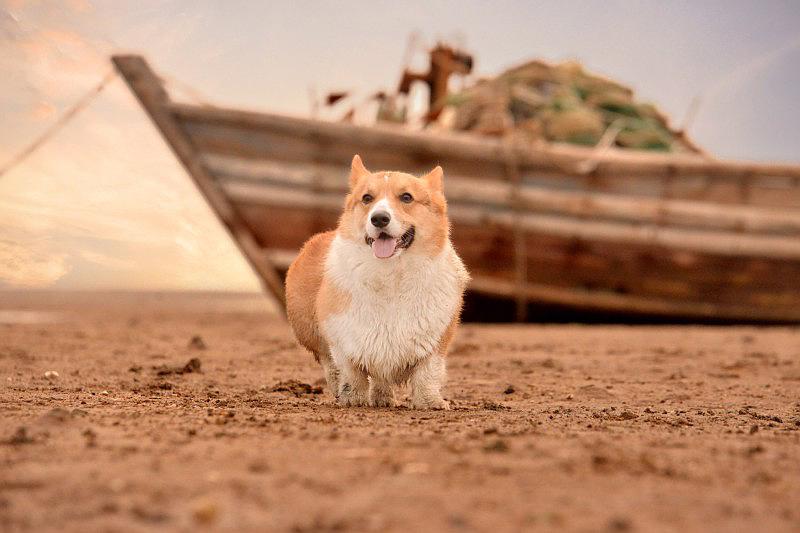
The Welsh Corgi has a medium-length, extremely dense double coat. The outer coat is slightly coarse in texture, but is never wiry, curly, or silky. This coat lies flat and provides protection from harsh weather. The inner coat is short, soft, and thick, providing insulation. The correct coat is characterized by short hair on the head, ears, and legs; medium-length hair on the body; and slightly longer hair on the neck and back of the thighs (called “breeches”).
Colour
Welsh Corgis come in various shades of red, fawn, or brindle. Black may or may not have light brown markings or spots. Blue merle (black and gray; marbled) may or may not have light brown markings or spots. Neither of these colors is preferred. White is usually found on the neck (partially or as a fringe on the neck), legs, chest, muzzle, underbelly, tail tip, and head. White on the head is not dominant and appears in limited amounts.
Head
Head: Fox-shaped, showing intelligence and a keen sense of familiarity, never timid. The skull is fairly broad and flat between the ears. The muzzle is moderately prominent, the cheeks are slightly rounded, and the muzzle tapers markedly towards the well-defined contours of the face. The distance from the occipital bone to the center of the muzzle protuberance is greater than the distance from the muzzle to the tip of the nose, representing a ratio of 5 parts of the total skull length to 3 parts of the total muzzle length. Eyes: Oval, medium-sized, neither round nor prominent.
eyes
The eyes are oval, medium-sized, neither round nor protruding, and slightly slanted. Eye color is brown, matching the coat color. The eye rims are black; black is the most desirable color. Black eyes appear expressive. Yellow and blue eyes are considered undesirable.
Ear
Ears: Solid, medium-sized, gradually rounded at the tip. The ears are mobile and sensitive to sound. A straight line drawn from the tip of the nose through the eye to the tip of the ear forms a roughly equilateral triangle. Bat-like ears, kitten-like ears, large drooping ears, drooping ears, or ears set too high or too low are undesirable. Cup-like ears, rose-like ears, or drooping ears are serious faults. The nose is completely black.
nose
The entire nose is black.
tail
Tail: Short and natural. The tail is usually short and sometimes appears naturally cropped. Sometimes puppies are born with naturally cropped tails, which is acceptable. If the tail is not cropped, it should not curve upward too much, disrupting the straight line of the dog’s back. A slight curve in the tail is considered acceptable. Cropped tails are short. Uncropped tails lie straight along the line of the back and hang naturally without curving back. When active, the tail remains parallel to the line of the back; when at rest, it hangs down. Tails held too high or too low are considered faults.
Chest
The Welsh Corgi’s chest is of medium width, tapering downward and resting comfortably between the forelegs. The shoulder blades slope downward and outward from the shoulders, providing ample room for the ribs to expand. These bones, long and well-sloped back, meet the upper arm at an angle of approximately 90 degrees. The upper arm bone is approximately equal in length to the scapula. The elbows are held close to the body, neither loose nor tight. The forearms (radius and carpal bones) are strong and straight.
neck
Neck: The neck is of sufficient length to maintain balance throughout the body. It is slightly arched, well-shaped, and well-aligned with the shoulders. A neck that is too short can create a stiff appearance, while a neck that is too long, thin, or sheepish can diminish the dog’s beauty.
front part
Forelegs: Short, as straight as possible, with elbows parallel to the body. Strong bones. Elbows close to the body, neither loose nor tight. Shoulders naturally positioned back, forming a 90-degree angle with the upper arm.
Previous part:
Hindquarters: Strong and agile, with naturally angled knees. Short legs. Good bone structure. The ankles are straight when viewed from behind.
Evolution and Origin of the Corgi
The Pembroke Welsh Corgi is very similar in appearance to the Swedish Vallhund. Later, it is believed that the Vikings brought the breed’s ancestors to Britain from Scandinavia. By the 19th century, the British widely used the breed to herd cattle and sheep to market. Due to their boundless energy and exceptional agility, the Pembroke Welsh Corgi’s ancestors were widely used as working dogs. Even today, this breed is a capable working dog as well as an excellent companion. Breeders have successfully trained these puppies to eliminate their innate tendency to fight other dogs.
How much does a corgi cost?
According to market research conducted by the editors of Pets Army, the price of a Corgi dog in India can range from approximately ₹40,000 to ₹120,000. The price varies depending on their appearance and quality. Nowadays, most people raise Corgis primarily as family companions. For this category of pet dogs, the requirements for appearance and breed are not very high. Corgis with good appearance, quality, and a calm temperament are suitable for purchase, selling for around ₹1,000 in the pet market. Even in kennels, the price of this category of pet dogs remains around ₹40,000 to ₹120,000. It’s not advisable to buy dogs that are too low, as they often develop problems after being brought home.
Intelligence of the Welsh Corgi
The short-legged Welsh Corgi is a very popular pet these days, captivating people with its adorable appearance. As a result, more and more people are choosing to adopt one. However, before adopting a Corgi, many people have questions like, “Are Corgis easy to train?” and “How intelligent are Corgis?” Let’s learn about the intelligence of the Welsh Corgi today.
Welsh Corgis’ place on the dog intelligence list
Welsh Corgis aren’t hard to find on this list, as they’re ranked at number 11. They can learn relatively simple training tasks in a short amount of time, while more complex commands may require owners to spend a little more time training. So, if you’re considering a Welsh Corgi, you don’t need to worry about their difficulty in training.
Small size, large protection capacity
Despite their small size, Welsh Corgis possess a calm disposition, exceptional courage, and keen intelligence, making them extremely popular as small guard dogs. Although many people believe that small breeds can be hyperactive, Welsh Corgis are calm dogs – you won’t have to worry about their mischievous behavior.
practice appropriate to the situation
Welsh Corgis are great outdoor enthusiasts. Some people may worry that they might scratch furniture indoors after watching them work so hard outside, but that’s not usually the case. that they might scratch furniture indoors, but that’s not usually the case. But that’s not the case. You’ll rarely see an adult Welsh Corgi exhibiting this behavior indoors. They usually only exercise outdoors—how wise!
Corgi temperament features
Corgis are small in stature but surprisingly strong, giving them the appearance of a robust physique, boundless energy, excellent bone structure, and remarkable stamina. They are among the most popular small guard dogs, being friendly and courageous by nature—neither timid nor aggressive. Although they are gentle, they should never be put into situations they find unappealing. Their intelligence is undeniable, and they are highly alert, protecting their home. They are gentle and enjoy the company of children, although children should always play under adult supervision. Naturally agile, they require adequate daily outdoor exercise and play. They are playful and prone to barking, so early training is essential to control excessive barking and chewing habits.
Corgi lifestyle
Short stature, with a medium bone structure and a broad chest. The overall body structure suggests its length is far greater than its height. The tail is set low and resembles a fox’s tail. Overall, it is a graceful, powerful little dog with excellent speed and stamina, with a strong build but not a rough one. Its gait is smooth and fluid. The Welsh Corgi’s coat is extremely easy to care for, requiring only weekly brushing. It has a gentle temperament and enjoys spending time with children—although adult supervision is essential during play. Naturally agile, it requires adequate daily outdoor exercise and play. Due to its playful and vocal nature, early training is essential to control excessive barking and chewing habits. Note: Since most urban dog regulations prohibit breeds with a shoulder height exceeding 35 cm, its small stature allows it to be legally domesticated and freely taken outdoors. Temperament: Calm, loyal, affectionate, and highly adaptable. Never shy or aggressive.
Advantages and Disadvantages of Corgis
Advantages: Easy to maintain. Welsh Corgis are short-haired dogs, making them suitable for outdoor activities. Even show-quality dogs only require trimming of the whiskers and claws, while other breeds require significant annual grooming. Since this breed doesn’t have body odor, daily brushing and a monthly bath are sufficient. Active yet calm: The Welsh Corgi is an energetic little working dog. Its speed, stamina, and agility during outdoor activities confirm what records indicate: this breed was once used to herd cattle. Yet, in family life, it remains remarkably sensible. As adults, they rarely jump around the house or search for things in cabinets, firmly adhering to the great principle: “They prefer to expend their energy primarily in outdoor activities.” Intelligent by nature: It is said that the eyes are the window to the soul. If you were to meet a Welsh Corgi, you’d have no doubt about its high intelligence. Even as puppies, they quickly grasp simple commands. As adults, their obedience and decisiveness become truly remarkable.
Selecting and Identifying Corgis
There are two types of Welsh Corgis : the Cardigan Welsh Corgi and the Pembroke Welsh Corgi. Comparatively, the Pembroke Corgi has a smaller body, straighter, and lighter legs, while the Cardigan Welsh Corgi has a slightly larger body and longer fur. However, the Pembroke Corgi is more restless and excitable than the Cardigan Welsh Corgi, lacking a calmer temperament. Corgi dogs have been a favorite pet of the British royal family, especially Queen Elizabeth II. The daily amount of food should be balanced—overfeeding or underfeeding hinders healthy growth.
What to feed a Corgi
Each meal should include meat along with equal amounts of whole grains, vegetables, carrots, and other plant-based foods. Regularly rotate the food varieties to ensure complete nutrition. First: Feed at a consistent time. Dogs are happiest eating the same food from the same bowl at the same time and place every day. The frequency of feedings depends on the dog’s physical condition, which requires regular evaluation.
How much water should a Corgi be given?
Provide adequate water. Always provide fresh, cool drinking water and change it frequently. Aim for at least 60 ml of water per kilogram of body weight daily. Puppies, lactating females, working dogs, or dogs living in hot climates require more water.
Corgi feeding rules
Control feeding amounts. The amount of food given each time depends on the dog’s daily energy requirements and the calorie content of the food. To avoid obesity, feeding amounts should be calculated regularly and adjusted according to changes in the dog’s weight.
Make diet changes gradually. Introduce new foods gradually over a week to allow your dog’s taste buds, digestion, and metabolism to adapt. Dogs’ digestive systems adapt more easily to new foods than humans, allowing them to begin functioning normally to digest unfamiliar items.
Proper feeding methods are just as important as the food’s composition. When feeding commercial food, strictly follow the manufacturer’s instructions. When preparing homemade food, avoid assumptions like “my dog eats what I eat,” “my dog eats what he likes,” or “my dog just eats.” Finally, never add leftover food, sweets, candy, cake, or chocolate to your dog’s food.
Tracking results: The effects of each dog’s diet and any changes to the diet should be recorded using simple indicators such as changes in weight, coat texture, stool characteristics, appetite, and daily behavior. If you keep track of these things, your dog will definitely stay healthy.
Health Care of the Corgi
Corgis are prone to eye diseases, so to prevent eye disease, their eyes should be washed with a 2% boric acid solution every 3 to 5 days. Regular grooming is essential: bathing, ear cleaning, dental care, and nail trimming. Although Welsh Corgis have short hair, frequent brushing helps maintain a neat and attractive appearance. Corgis have very little body odor, so bathing once a month is sufficient.
The kennel should be ventilated, clean, and dry, and disinfected every two weeks to prevent bacterial growth. Daily meals should include 200-250 grams of meat and an equal amount of vegetarian food. Plant-based options can include various grains, vegetables, carrots, etc. Regularly rotate food varieties to ensure complete nutrition. Feed the appropriate amount daily—overfeeding hinders healthy growth. Although the Corgi’s fur is slightly coarse and not very long, regular brushing is essential to maintain cleanliness and beauty. Regular grooming is essential: bathing, cleaning earwax and dental debris, rinsing the eyes with lukewarm (boiled or cooled) water, and trimming nails. Corgis are prone to eye infections, so to prevent problems, flush their eyes with a 2% boric acid solution every 3-5 days. Choose a safe, clean, and dry location for the Corgi’s kennel and disinfect it every two weeks to a month.
Since Corgis are primarily herding dogs with an active and lively nature, they shouldn’t be kept confined indoors permanently. To maintain their healthy and energetic nature, allow them adequate outdoor exercise. Pembroke Corgis often struggle to get along with other dogs. Therefore, training and socialization must begin from puppyhood to improve this tendency and help them live harmoniously with other dogs. Welsh Corgis are extremely easy to care for, requiring only weekly brushing. They have a gentle temperament and enjoy spending time with children, although adult supervision is essential during play. Naturally agile, they require adequate daily outdoor exercise and play. Due to their playful and barking nature, early training is crucial to control excessive barking and chewing habits. Some cities may have restrictions on large dogs, so the Corgi’s small size is considered convenient for many people.
Frequently Asked Questions (FAQs)
How many types of Welsh Corgis are there?
There are two types of Welsh Corgis: the Cardigan Welsh Corgi and the Pembroke Welsh Corgi.
Have Corgi dogs been pets of the British royal family?
Corgi dogs have been a favorite pet in the British royal family, especially Queen Elizabeth II.
How much does a corgi dog cost?
According to market research data conducted by the editors of Pets Army, the price of a Corgi dog in India can range from around ₹40,000 to ₹1,20,000.
Are Corgi dogs easy to train?
They can learn relatively simple training tasks in a short amount of time, while more complex commands may require owners to invest a little more time in training.
What is the intelligence rank of Corgi dogs?
Welsh Corgis aren’t hard to find on this list, as they’re number 11.
Are Corgi dogs good with children?
They have a gentle temperament and enjoy spending time with children, although adult supervision is necessary when playing.
How much exercise does a Corgi dog need daily?
Being naturally agile, they require plenty of outdoor exercise and play every day.
How should a Corgi dog be cared for?
Welsh Corgis have extremely easy fur care, they only need to be brushed once a week.
How much water should a Corgi dog be given?
Aim to provide at least 60ml of water per kilogram of body weight daily.
How should a Corgi’s eyes be cared for?
Corgis are prone to eye diseases, so their eyes should be washed with a 2% boric acid solution every 3 to 5 days to prevent eye diseases.